
The challenge
thingtrax had built an innovative industrial technology platform, and a brand that did not communicate that leadership clearly.
The visual identity lacked cohesion and sales materials varied from one document to the next. Individually, none of that is fatal. Collectively, it puts a company at a disadvantage in exactly the rooms where it needs to win.
The audience explains why. thingtrax sells to operations leaders, plant managers and technical buyers evaluating innovation in industrial environments, alongside investors assessing the company itself. Those are risk-assessing audiences. A plant manager is deciding whether to put an unproven system into a live production environment, and a procurement process that involves several people will judge consistency as a proxy for maturity long before anyone tests the technology.
The company was also talking to two audiences with different tests. Enterprise buyers want evidence that a supplier will still be there in three years and can support a deployment at scale. Investors want evidence of category leadership. Both were being asked to form that judgement from materials that did not look like they came from the same business.
The opportunity was to build one brand system that positioned thingtrax as a category leader, aligned messaging, website and pitch materials around a single narrative, and gave the company a consistent foundation as it grew.
Our solution
We ran a positioning and messaging workshop first, and built everything else on what came out of it.
Fixing the narrative before the design work is what stops a rebrand becoming a repaint. The workshop produced a unified story about what thingtrax does and why it matters in industrial environments, which then became the brief for every asset that followed.
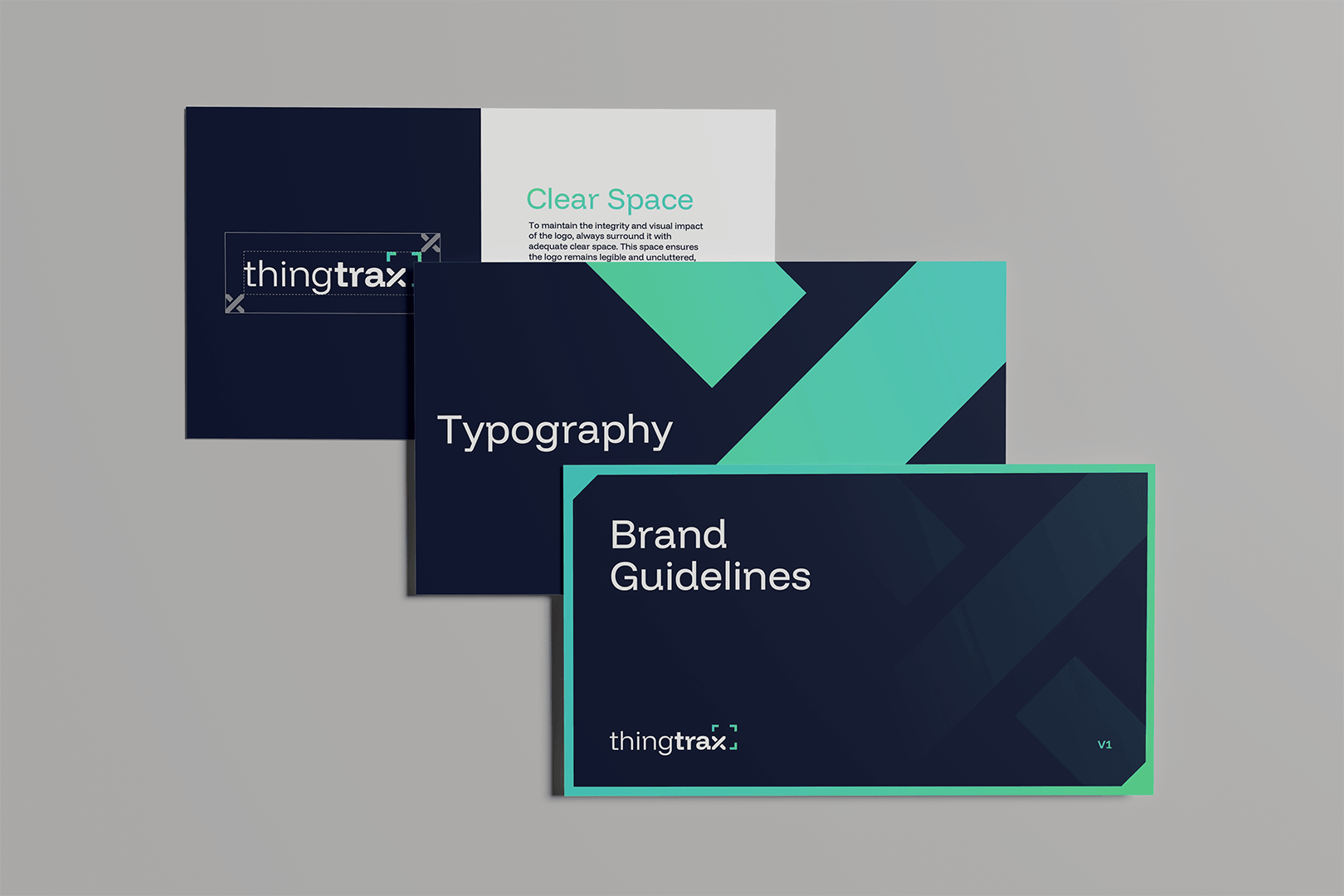
We evolved the visual identity to feel sharper and more premium. Evolution rather than replacement was deliberate: thingtrax had equity worth keeping with existing customers, and the problem was inconsistency in how the identity was applied, not the identity itself.
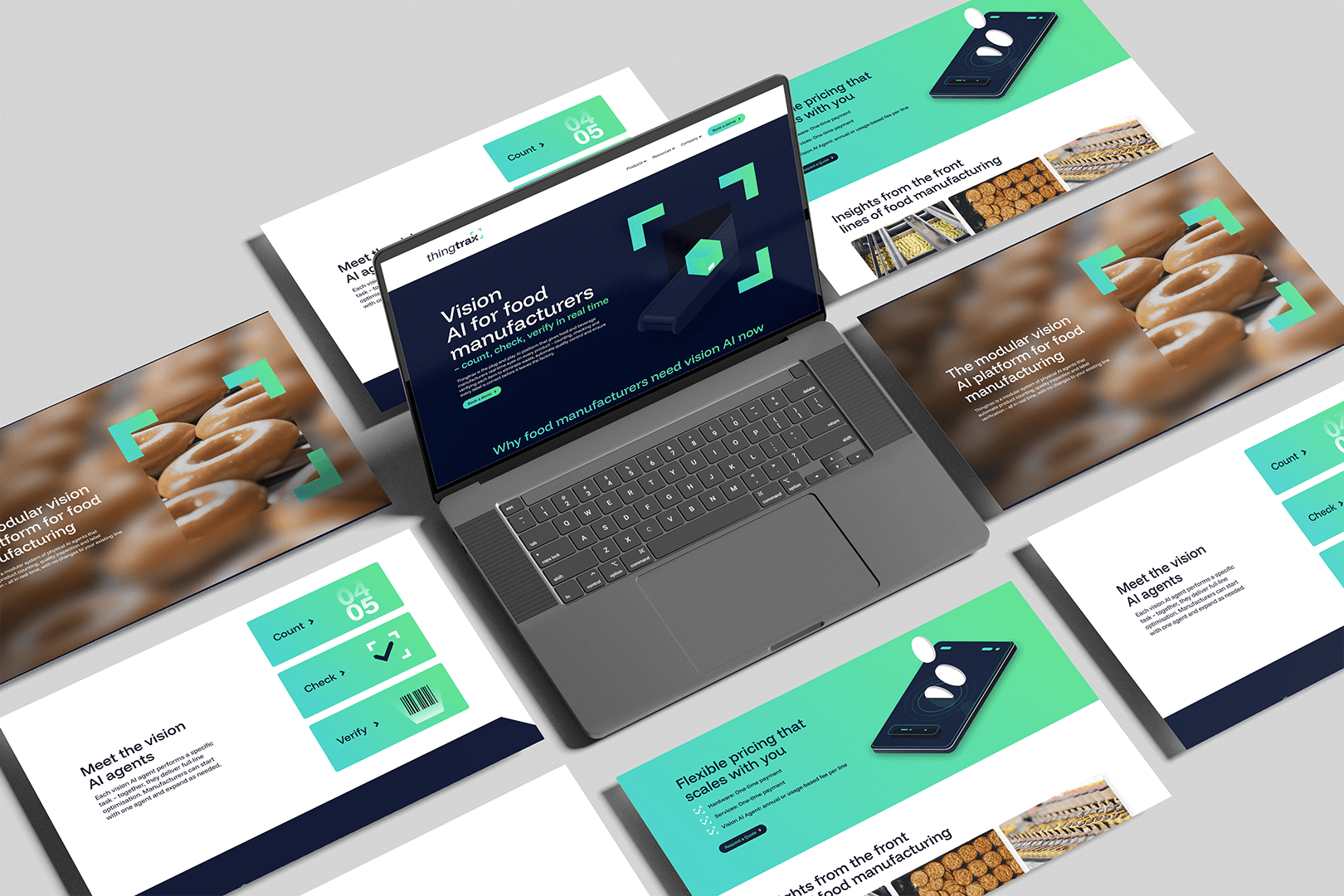
The website was restructured around clarity and ease of navigation, so that a technical buyer and an investor could each find what they needed without working for it. CRM and lead capture were integrated directly into the build, which makes the site part of the commercial pipeline instead of a brochure that happens to sit online.
We then built a 20-slide investor-ready pitch deck aligned to the new identity, so the argument made on the website is the argument made in the room.
Modular templates for the sales and marketing teams completed the system. This is the part that determines whether any of it survives contact with a growing company. Without templates, consistency depends on individual discipline and decays within months. With them, the brand holds while the team scales.
The outcome
thingtrax now shows up as a cohesive, credible technology company.
The sales team operates with structured, aligned materials, which removes the quiet cost of everyone rebuilding their own version of the same slide. The website reinforces the same narrative found in the pitch deck, so a prospect who researches before a meeting and a prospect who researches afterwards encounter one consistent company.
Investor conversations feel sharper and more assured. For a business seeking to be recognised as a category leader, that consistency is part of the evidence: a company that presents a clear, coherent account of its own position is easier to believe about the position itself.
The brand now actively supports commercial momentum instead of lagging behind the product, and the system is built to hold as the company adds people and markets.
The result is a brand that finally matches the technology underneath it: one narrative, one identity, and a set of materials that make the same argument wherever a buyer or an investor encounters them.
